
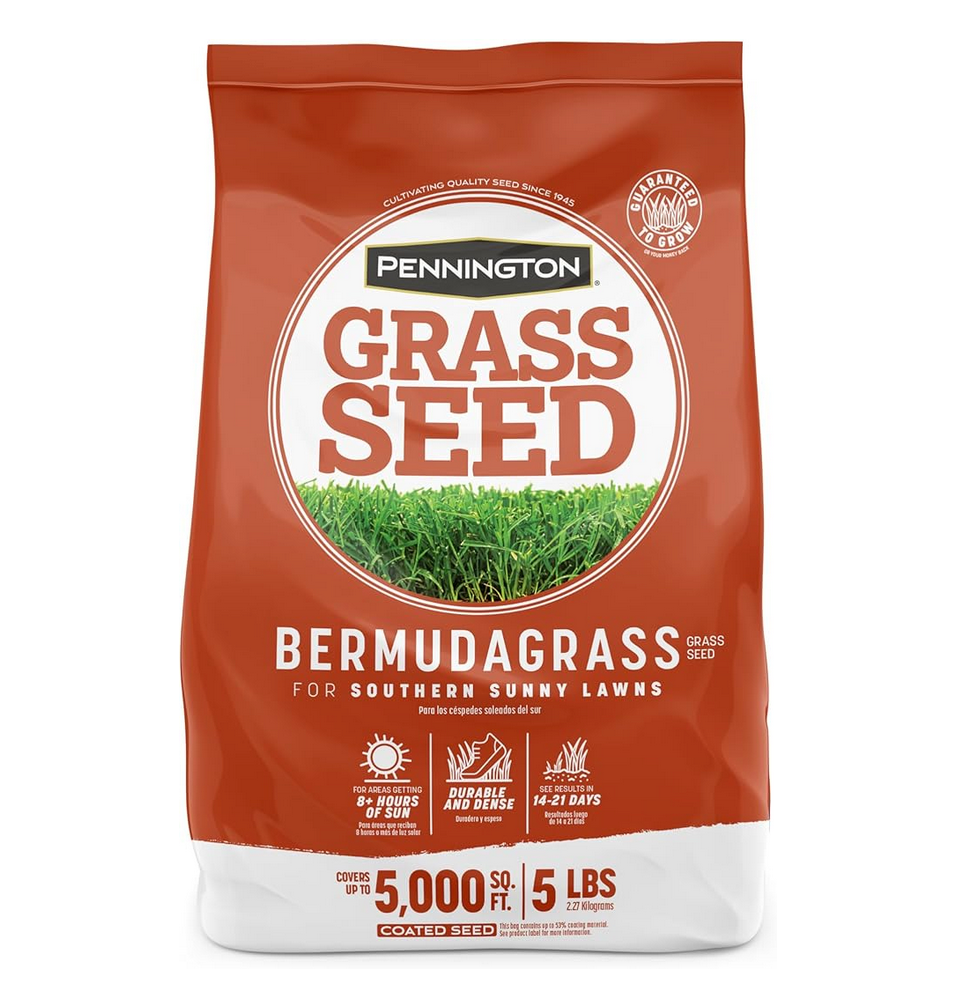
Bermuda Grass Seed 5 lb
$29.99
If you want a tough, fast-spreading warm-season lawn that recovers quickly from wear and tolerates heat and drought, Pennington’s Bermudagrass blend is a practical, budget-friendly option. This 5 lb retail bag is designed for homeowners who need patch repairs, overseeding, or small new lawns in sunny, warm climates. Below you’ll find a clear product summary, step-by-step planting instructions, maintenance tips, pros and cons, troubleshooting advice, and a handy FAQ to help you decide whether this seed is right for your yard.
Description
Pennington Bermudagrass Grass Seed (5 lb) is a warm-season grass mix formulated to produce a dense, low-growing turf that spreads aggressively via stolons and rhizomes. The blend includes improved, cold-tolerant varieties to extend bermuda’s performance into more moderate or transition climates, and it ships with Pennington’s Penkoted seed coating to improve handling and germination consistency. The manufacturer recommends 2 lb per 1,000 sq ft for new lawns or bare spots and 1 lb per 1,000 sq ft for overseeding thin areas.
Why people pick this product: bermuda establishes relatively fast in warm soils, tolerates heavy traffic, and naturally resists drought once established, making it popular for family yards, play areas, and sun-exposed landscapes.
Who this seed is best for
-
Homeowners in USDA warm or transition zones who want a low-maintenance, wear-tolerant lawn.
-
Owners repairing pet or play-worn patches who want quick recovery and spreading.
-
People who prefer a warm-season alternative to cool-season turfs in sunny yards.
Avoid it if you live in a cold, frost-prone climate where warm-season grasses go brown for long winters, or if you want an ultra-fine, formal turf (bermuda is coarser than many fine fescues and requires summer coloration).
Before you buy – what the 5 lb bag actually covers
A 5 lb bag is best for patching, overseeding, or small lawns; for full lawn installs check the seeding rate and calculate area coverage. Pennington lists application rates (2 lb/1,000 sq ft for new/bare spots; 1 lb/1,000 sq ft for overseeding), so plan how many bags you’ll need before ordering. This packaging and guidance make the product handy for targeted repairs and small projects.
Step-by-step planting guide
Follow these steps for reliable germination and a healthy stand:
-
Timing
Plant bermudagrass in late spring to early summer when soil temperatures are consistently warm (above about 65°F). Warm soil speeds germination and establishment. -
Site prep
Remove debris and weeds. Loosen the top 1–2 inches of soil and level the seedbed. For new lawns, improve poor soils with compost or a starter topsoil if needed. -
Seed application
For new lawns or bare spots apply at ~2 lb per 1,000 sq ft. For overseeding, apply at ~1 lb per 1,000 sq ft. Use a spreader for even distribution and lightly rake to ensure seed-to-soil contact. -
Watering
Keep the seedbed consistently moist during germination with light, frequent waterings. Once seedlings are established, transition to deeper, less frequent irrigation to encourage strong root development. -
First mow
Mow when grass reaches approximately 1.5–2 inches, removing no more than one-third of the blade at a time. Regular mowing encourages lateral spreading and density. -
Post-establishment care
After the first month reduce frequency of watering and begin a light fertilization program based on soil test recommendations.
Maintenance and care tips
-
Mowing height: Maintain bermuda at 0.75–2.5 inches depending on variety and use. Shorter mowing increases density but requires more frequent cutting.
-
Fertilization: Bermuda responds well to nitrogen; apply based on soil tests and regional extension recommendations. Avoid heavy feeding in cooler shoulder seasons.
-
Irrigation: Once established, bermuda is drought-tolerant but performs best with deep, infrequent watering (about 1 inch per week in active season, adjusted for rainfall).
-
Weed control: Address weeds early during establishment. Once dense, bermuda naturally outcompetes many annual weeds. Use herbicides labeled for bermudagrass as needed.
-
Aeration: Annual core aeration reduces compaction and encourages root depth in high-traffic sites.
Pros and cons
Pros
-
Fast-spreading, aggressive recovery via stolons and rhizomes.
-
Good drought and wear tolerance for active yards.
-
Penkoted coating improves handling and sowing accuracy.
-
Includes improved cold-tolerant varieties that broaden growing zones.
Cons
-
Goes dormant and turns brown in cool seasons (typical warm-season behavior).
-
Can be invasive in garden beds without edging, due to spreading habit.
-
Needs full sun for best results; performs poorly in deep shade.
Common problems and quick fixes
-
Patchy germination – Ensure good seed-to-soil contact and consistent moisture. Compact or crusted soil prevents emergence.
-
Thin stands – May be due to competition from weeds or insufficient seeding rate; overseed or spot seed thin areas and keep them watered.
-
Brown winter lawn – Normal for bermuda; plan summer use accordingly or consider overseeding with a cool-season grass if year-round green is desired.
-
Thatch buildup – If thatch accumulates, dethatch or aerate to restore water and nutrient flow.
Environmental considerations
Bermudagrass’s drought tolerance reduces summer irrigation needs compared with many cool-season grasses, which is attractive in water-wise landscapes. However, its aggressive spreading can require control to prevent encroachment into planting beds. Use appropriate edging and consider native or low-input alternatives if ecosystem compatibility is a priority.
Reviews
There are no reviews yet.