
Palm trees deliver instant tropical impact and can become long-lived focal points in gardens, yards, and commercial landscapes. But palms are not low-effort trees by default – they have specific nutritional needs that regular garden fertilizer may not meet. This guide explains what palm trees require, how to choose the best palm fertilizer, how to apply it safely, and which products and practices give reliable results for both container-grown and in-ground palms.
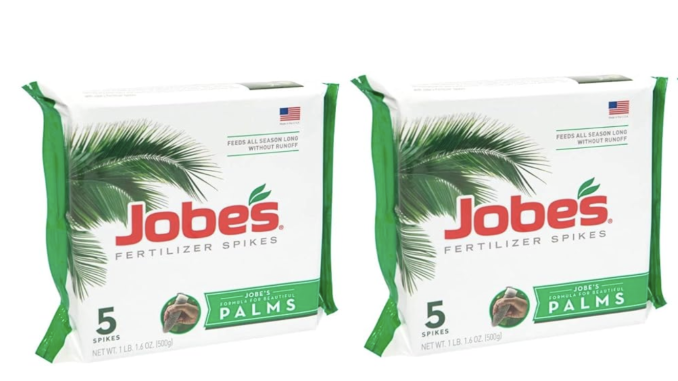
7 LB. Perfect Palm – Dual Action Palm Tree Fertilizer with Free Measuring Scoop
Jobe’s Palm Tree Fertilizer Spikes
Why palm-specific fertilizer matters
Palms differ from many other trees in nutrient uptake and sensitivity. Key nutrients for palms include nitrogen, potassium, magnesium, manganese, and iron – plus a range of micronutrients. Deficiencies can cause distinctive symptoms:
- Nitrogen deficiency – overall yellowing and slow growth.
- Potassium deficiency – yellow or orange spotting on older fronds, progressing to necrotic tips.
- Magnesium deficiency – older fronds develop yellow margins while the midrib stays greener.
- Manganese or iron deficiency – new fronds emerge pale or yellow, a condition common in high-pH soils.
Generic lawn or tree fertilizers often lack the precise balance palms need, so a palm-formulated product reduces the risk of hidden deficiencies and supports steady, attractive growth.
Types of palm fertilizers
There are several formats to consider – each has pros and cons:
- Slow-release granular fertilizers – Blend of nutrients released gradually with moisture and temperature. Good for in-ground palms and long intervals between feedings.
- Fertilizer spikes – Pre-measured, inserted into the root zone. Convenient and tidy. Best for home gardeners who prefer simple application.
- Water-soluble fertilizers – Dissolve and apply with watering. Useful for rapid correction and container palms, but effects are shorter-lived.
- Organic options – Compost, fish emulsion, and kelp provide nutrients and improve soil biology. They act slower but support long-term soil health.
- Controlled-release tablets/pellets – Engineered to release specific nutrient amounts over months. Useful for commercial landscapes requiring predictable results.
How to fertilize palms – practical steps
- Test the soil first – pH and nutrient tests show whether you need iron or manganese supplements, or pH correction. Palms generally prefer slightly acidic to neutral soils.
- Choose the right formula – Look for a palm fertilizer that lists N-P-K plus magnesium and micronutrients like manganese and iron. A common ratio is higher nitrogen with adequate potassium – product labels and palm-specific recommendations will vary.
- Apply near the drip line – Spread granular fertilizer evenly around the root zone, from the trunk out to the drip line. For spikes, insert them following manufacturer spacing around the drip line.
- Water in – After application, water thoroughly to move nutrients into the root zone. For spikes and controlled-release products, follow package instructions about watering.
- Timing and frequency – Many palm fertilizers are applied 2-4 times per year for established trees – typically in spring, early summer, mid-summer, and early fall. Container palms often need more frequent, lighter feedings. Always follow product directions.
- Avoid overfertilizing – Too much fertilizer causes salt build-up, root burn, and abnormal growth. Less is better than more if you are unsure.
Recommended use cases – ground vs container palms
- In-ground palms – Use slow-release granular or controlled-release fertilizers applied in spring and repeated as needed. Ensure good irrigation to help nutrients move through the root zone.
- Container palms – Use water-soluble or liquid feeds every 4-6 weeks during the growing season, and supplement with slow-release pellets in the potting mix for steadier nutrition.
- Newly planted palms – Avoid heavy fertilization immediately after transplant. Wait until the root system is re-established, usually after a few months, then begin a gentle feeding program.
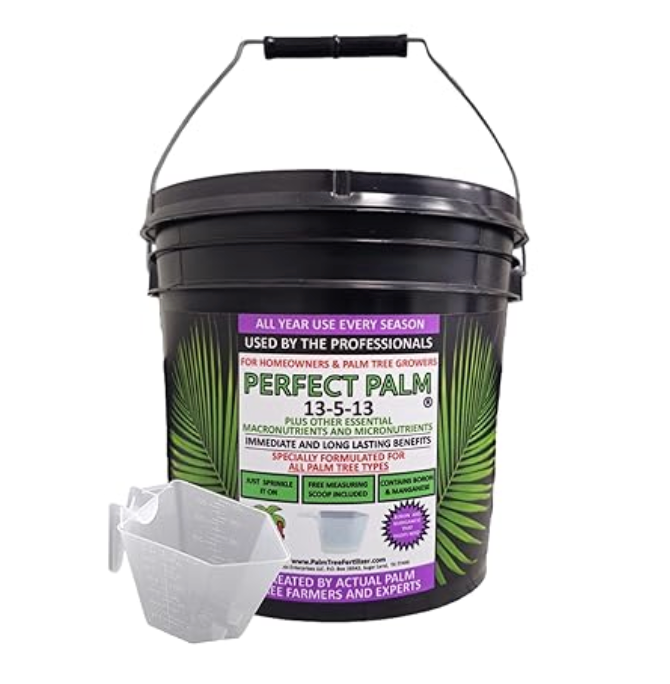
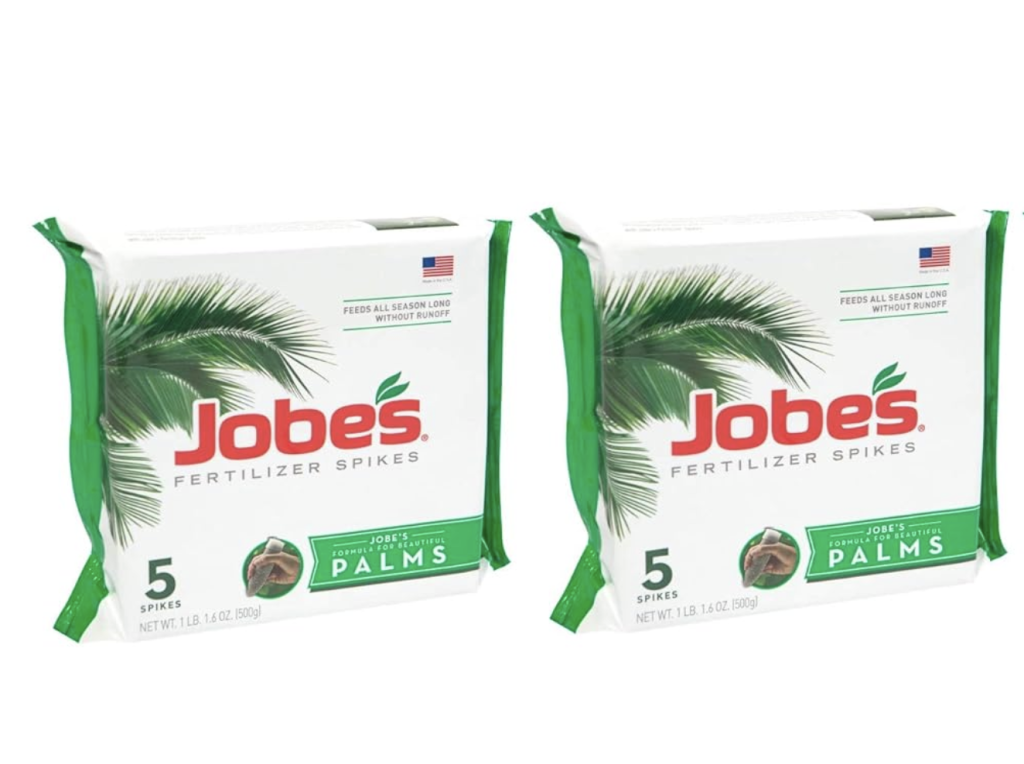
Product spotlight – Jobe’s Palm Tree Spikes
Jobe’s Palm Tree Spikes are a popular, user-friendly option for home gardeners. They are pre-measured fertilizer spikes formulated for palms and designed for insertion into the soil near the drip line. Benefits:
- Provide slow-release nutrients directly to the root zone.
- Contain nitrogen, potassium, magnesium, and other key minerals palms need.
- Easy to apply – push spikes into the soil without mixing bags or measuring.
- Useful for both larger outdoor palms and smaller container varieties when you select the appropriate spike pack.
Application tips for spikes – follow manufacturer guidance, but general practice is to place spikes around the drip line, firm the soil, and avoid over-application. Jobe’s also makes thinner spikes tailored to smaller plants and container use – apply those per label timing, often twice yearly for many indoor or small-container palms.
Common problems and how to correct them
- Yellowing new fronds – Often a micronutrient deficiency such as iron or manganese. Test soil pH and apply a chelated iron or manganese product if needed.
- Brown tips or frond scorch – Could be salt build-up from over-fertilization or inconsistent watering. Flush soil with generous irrigation and reduce fertilizer rates.
- Stunted growth – Check for root health, compaction, and adequate potassium and nitrogen levels. Consider a balanced palm fertilizer and ensure proper irrigation.
- Pale older fronds with green midribs – Classic magnesium deficiency – apply a magnesium supplement or use a palm fertilizer with magnesium included.
Environmental and safety considerations
- Choose slow-release formulations to minimize nutrient runoff.
- Follow label rates strictly to avoid leaching and environmental harm.
- Store fertilizers in a cool, dry place away from children and pets.
- Dispose of empty bags responsibly and avoid applying before heavy rain.
Buying tips
- Prefer palm-specific products that list micronutrients on the label.
- Look for controlled-release technologies if you want fewer applications.
- Read user reviews for your local climate – product performance can vary by region.
- Consider organic or blended approaches if you prioritize soil health and sustainable practices.
Leave a Reply