
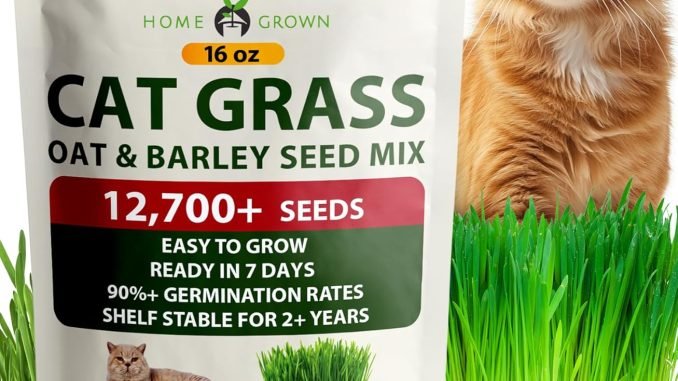
If you want an easy, budget-friendly way to keep your cat happy and help them with digestion and hairball control, growing a small patch of cat grass at home is one of the simplest solutions. The HOME GROWN Cat Grass Seeds 16.0 ounce oat and barley mix is a popular, well-priced option that’s sold through Amazon and aimed at indoor cat owners who want fresh, safe greens on demand. This review covers what the product is, why cat grass helps cats, how to grow it successfully, practical tips for daily care, and answers to common questions so you can decide whether this seed mix is right for your home.
Product overview
HOME GROWN’s 16.0 oz cat grass mix typically contains oat and barley seeds that are non-GMO and heirloom, formulated to germinate reliably and produce tasty, digestible greens for cats. The listing highlights a high germination rate, a comprehensive online grow guide, and suitability for both indoor and outdoor use. The product is positioned for year-round planting and is sold in a one-pound (16 oz) unit that is ideal for repeated small plantings or for families with multiple cats. Price points and availability vary, but the listing on Amazon has been offered at around $9.74 in recent displays.
Why grow cat grass?
Cats are obligate carnivores, but many will chew grasses for a few practical reasons:
- Grass provides fiber and trace nutrients that help digestion and can ease hairball passage.
- Chewing fresh greens gives indoor cats a small-foraging enrichment that reduces boredom and may deter them from nibbling on houseplants that can be toxic.
- Growing grass at home is cheaper and safer than giving cats random yard clippings, which may carry pesticides, herbicides, or contaminants.
A dedicated pot of cat grass is a low-cost, low-effort enrichment that most cats respond to eagerly.
What’s in the HOME GROWN mix and who it suits
This oat and barley seed mix is simple and targeted:
- Oat and barley are gentle on feline stomachs and sprout quickly.
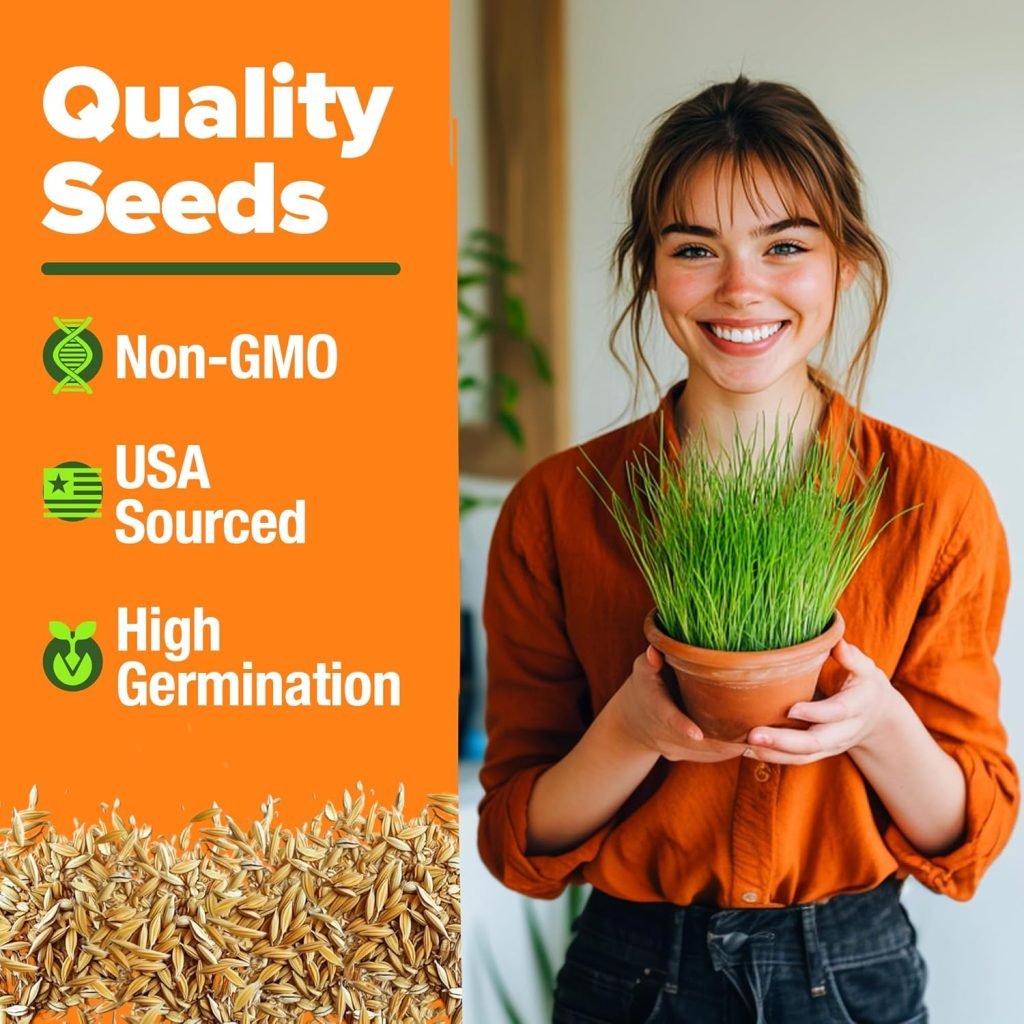
- The seeds are marketed as non-GMO and heirloom, and the product emphasizes high germination and a pet-friendly composition.
- The 16 oz size gives you enough seed for multiple plantings or for a continuous supply by staggering sowings.
This mix suits owners who want an inexpensive, fast-growing option for indoor planters, window-sill trays, or small pet grass kits. It’s also a good choice for multi-cat homes where you need more frequent regrowth.
How to grow cat grass – step-by-step
Growing cat grass is fast and forgiving. Follow these steps for consistently good results:
- Choose a container – Use a shallow tray or a small pot with drainage. Seed trays sold for microgreens work well for dense, even mats of grass.
- Prepare the medium – Fill the container with a light potting mix or seed-starting mix; a 1-2 inch depth is sufficient for cat grass.
- Soak seeds (optional) – Soaking seeds for a few hours before sowing can speed germination. For oats and barley this is optional but helpful in cool conditions.
- Sow evenly – Broadcast seeds evenly over the surface; aim for a thin, uniform layer so plants are not overcrowded. Press seeds lightly into the soil for good contact.
- Cover and keep moist – Lightly mist the surface, cover with plastic wrap or a humidity dome until sprouts appear, then remove the cover. Keep the soil consistently moist but not waterlogged.
- Provide light – Bright indirect light or a grow light for 8-12 hours daily will keep the grass lush and green. Direct hot sun can overheat shallow trays.
- Harvest timing – Expect shoots in 3-7 days and a good harvest around 7-12 days depending on temperature. Cats usually prefer 3-6 inch grass; you can snip with scissors to maintain that height.
Stagger plantings every 1-2 weeks for a continuous supply of fresh greens.
Practical care tips
- Replace rather than over-trim – Cat grass regrows for a short time but will yellow and thin after a couple of harvest cycles. For hygienic reasons, replace the mat every 2-4 weeks.
- Indoor cleanliness – Use a drip tray and place pots on saucers to catch water; shallow trays dry quickly so check moisture daily.
- Avoid additives – Don’t add fertilizers or growth regulators; plain potting mix is fine and keeps the grass safe for pets.
- Rotate trays – If you keep trays by a sunny window, rotate them so the grass grows evenly and doesn’t lean.
- Watch for mold – Overcrowded or constantly wet trays can develop mold; ensure good airflow and avoid overwatering.
Health and safety
The oat and barley varieties in this mix are commonly used for pet grass and are generally safe. However:
- Always supervise initial interactions, especially for kittens or cats with dietary sensitivities.
- If your cat shows vomiting beyond normal hairball behavior, lethargy, or other concerning symptoms after eating grass, consult your veterinarian.
- Keep plant trays clean to avoid attracting pests or mold.
Environmental and product notes
HOME GROWN’s product description stresses non-GMO heirloom seeds and includes a grow guide to improve yields and success. The product is sold by small-business sellers on Amazon and often comes with positive buyer feedback for germination and value. As with any seed product, check storage and handling instructions on arrival.
Pros and cons at a glance
Pros:
- Affordable and fast germination for fresh cat greens.
- Suitable for indoor growing year-round.
- Large 16 oz pack gives multiple plantings or a continuous schedule.
- Oats and barley are palatable and gentle on cats’ digestive systems.
Cons:
- Shallow trays and dense plantings need frequent replacement to stay hygienic.
- Some cats may prefer different grass types; individual taste varies.
- If you want a permanent living decoration, cat grass is a short-term edible crop rather than a long-lived plant.
Where to buy
This 16.0 oz HOME GROWN cat grass seed mix is commonly available through major marketplaces, including Amazon. Check product pages for current price, seller details, and shipping options. If you prefer local pickup or same-day options, see local garden centers that sell similar oat/barley blends for pets.
If you want an easy, inexpensive way to give your cat safe fresh greens that support digestion and reduce the urge to chew houseplants, the HOME GROWN Cat Grass Seeds 16.0 oz oat and barley mix is a strong choice. It’s beginner-friendly, fast to sprout, and sized perfectly for owners who want repeated plantings or enough seed to keep multiple trays going. Follow simple sowing and care steps for reliable results, and replace trays regularly to keep the grass fresh and hygienic.
Most trays sprout in 3-7 days; grass is usually ready to nibble at 7-12 days when it reaches 3-6 inches.
Replace the tray every 2-4 weeks for best freshness and cleanliness. Stagger plantings weekly for continuous supply.
Yes, mixes are common. HOME GROWN’s oat and barley formula is already a palatable combination, but you can trial small mixes if desired.
Generally yes, but supervise first exposures. If kittens have digestive issues, consult your vet first.
Yes, in moderate climates you can sow trays or beds outdoors, but indoor trays let you supply grass year-round and avoid pesticides or yard contaminants.
Leave a Reply