
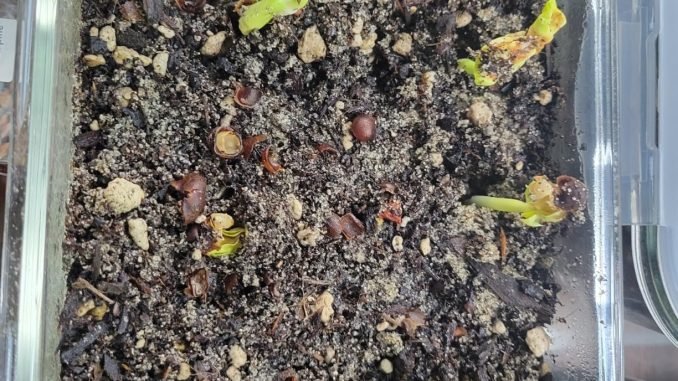
If you’re looking for an unusual, long-term gardening project, baobab tree seeds are a rewarding choice. The baobab (Adansonia spp.), often called the “Tree of Life,” is famous for its massive trunk, sculptural silhouette, and cultural importance across Africa. This review covers the Amazon listing for a 5-seed packet sold by CZ Grain, what to expect from the product, and practical tips for germination and early care.
Product summary
This Amazon listing offers a pack of 5 baobab tree seeds, sold by CZ Grain (small business seller) and marked as “Amazon’s Choice.” The product page highlights that the seeds are ready to plant and claim “no stratification needed,” and lists the seeds as suitable for indoor growing or greenhouse cultivation (they will not tolerate harsh winter outdoors). The listing also shows seller return policy and a 30-day refund/replacement option.
Key details from the listing:
- Quantity: 5 seeds per packet.
- Seller: CZ Grain LLC (small business).
- Marketing notes: “No stratification needed,” “grows well indoors or in a greenhouse,” and photos of mature trees are for reference only.
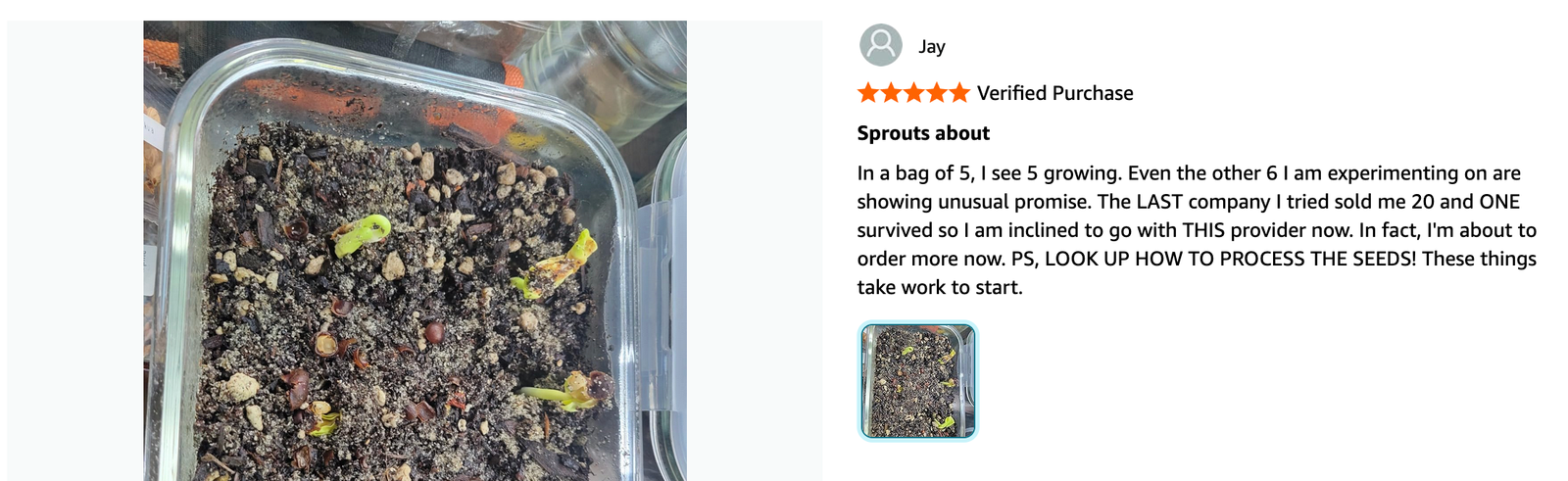
First impressions and suitability
These seeds are aimed at hobby growers and bonsai enthusiasts who want to experiment with a sculptural, slow-growing tree. The product is well suited to:
- Indoor growers who can provide warmth and bright light (grow lights may be needed).
- Greenhouse growers in temperate climates.
- Bonsai hobbyists who want a dramatic caudiciform specimen.
Keep in mind that baobabs are tropical to subtropical trees; unless you live in a frost-free region, seedlings will need indoor or greenhouse care for several years before any outdoor transition is possible. The Amazon product page explicitly warns that plants “won’t survive outdoors in harsh winter.”

Click here for Baobab Tree Seeds
Germination – what actually works
Baobab seeds have a very hard seed coat and can show physical dormancy. Fortunately, several dependable pre-treatments improve germination rates:
- Hot water soak / boiling water scarification – Pouring hot (not boiling) water over seeds and letting them soak as they cool for 12–24 hours loosens the seed coat and speeds germination. Many growers report quick results after this simple treatment.
- Mechanical scarification – Lightly nicking or sanding a small area of the seed coat helps water penetrate and can increase germination uniformity. Academic studies support scarification as an effective technique.
- Acid scarification – Research literature (and some commercial protocols) shows concentrated acid treatments improve germination for large batches, but acid methods are for experienced growers with proper safety equipment.
Practical routine for home growers:
- Soak seeds in hot water (pour near-boiling, allow to cool) and leave to soak 12–24 hours.
- Optionally nick the seed coat with a file or sandpaper if you prefer mechanical scarification.
- Sow in a well-draining mix (one part potting soil + one part coarse sand/perlite) at shallow depth.
- Keep the medium warm (ideally above ~20°C / 68°F) and consistently moist but not waterlogged. Under warm, stable conditions many growers report germination within days to a few weeks.
Scientific studies back those practical tips: experiments show that heat, acid, and mechanical scarification all improve germination success in Adansonia species, and warm soil temperatures significantly boost emergence.
Early care and growing on
Baobabs prefer bright light and warmth. For best results with seedlings:
- Light: Give at least six hours of direct sun or strong grow-light exposure daily. If you can’t provide full sun, supplement with LEDs.
- Temperature: Maintain warm conditions above roughly 15–20°C (59–68°F). Baobabs are frost-sensitive and should be brought indoors before cold snaps.
- Watering: Baobabs tolerate drought better than constant wet soil. Water moderately and allow the topsoil to dry between waterings; good drainage is essential. Overwatering can cause root rot.
- Potting: Start in small pots for root development, then repot to larger containers as the trunk thickens. For bonsai work, shallow pots can be used later to control size.
Baobabs are slow to mature but can respond quickly in the first years with sturdy trunk thickening under correct conditions. Commercial and academic trials report patience is required, but the visual payoff is strong.
Pros and cons
Pros
- Rare, exotic seed that’s rewarding to grow.
- Small packet (5 seeds) is affordable risk for experimentation.
- Useful for bonsai and caudiciform collectors who want a sculptural subject.
Cons
- Seeds require scarification or soaking for reliable germination; beginners must follow pre-treatment steps.
- Long-term project: baobabs grow slowly to a tree; maturity and full form take many years.
- Not winter-hard in cold climates; seedlings need indoor/greenhouse care unless you live in a frost-free area.
Seller & fulfilment notes
The Amazon page indicates the item ships from Iowa and lists a 30-day return/replacement window for this seller (CZ Grain LLC). As with any seed purchase, check delivery times and local seed import rules in your country—some jurisdictions restrict seeds or require permits.
Verdict
For adventurous gardeners, bonsai hobbyists, and collectors of unusual plants, this 5-seed pack is a good value and an accessible entry point into growing baobabs. Follow proven scarification/germination methods and provide steady warmth and bright light to maximize germination and healthy early growth. If you want fast results or a low-maintenance houseplant, this is not the best option—but if you enjoy projects, learning propagation techniques, and growing a striking specimen over the long term, these seeds are a strong choice.
Most hobby protocols use scarification (hot water, nicking, or acid for large batches) rather than cold stratification. The product page states “no stratification needed,” but pre-treatments to break the hard coat are recommended for best germination.
Only in frost-free, warm climates. Otherwise grow seedlings indoors or in a greenhouse until large enough to tolerate local conditions.
With proper scarification and warm soil, germination can appear within days to weeks. Scientific studies and grower reports show variable timing depending on treatment and temperature.
Leave a Reply