
Click here for discounted fake palm trees products
Palm trees are the visual shorthand for tropical luxury: they promise warmth, leisure, and exotic settings. But real palms need the right climate, regular pruning, pest control and sometimes costly irrigation and soil amendments. Artificial palm trees deliver the same visual impact without the ongoing work. They keep their shape, color and presence year-round – so your pool area always looks polished and inviting.
Artificial palms can evoke the same atmosphere you’d find in resort destinations like Miami, Honolulu, or Dubai – but with far less maintenance and far fewer constraints.
Key Benefits
Low maintenance: No trimming, minimal cleaning, and no fertilizer means less time and expense.
Durability: Made from weather-resistant plastics, UV-treated fabrics, or preserved natural fronds, modern faux palms are built to withstand sun, wind and occasional rain.
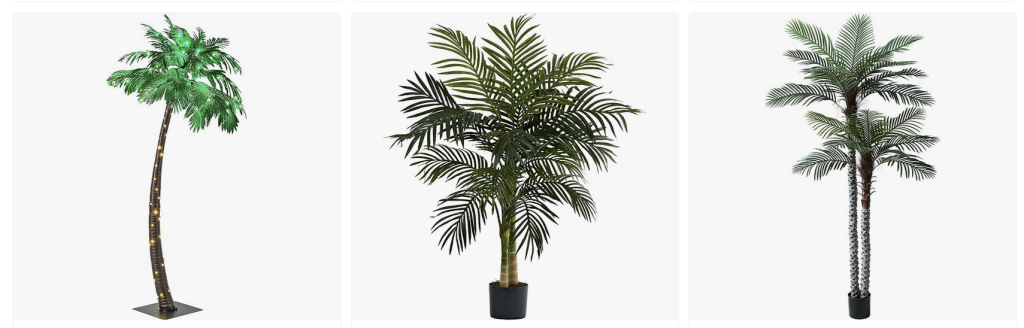
Design flexibility: Available in a wide range of heights, trunk styles and canopy densities to match any aesthetic — from minimalist modern to lush tropical.
Year-round aesthetics: No seasonal browning or leaf drop; your landscaping looks consistent in every photo and every season.
Chemical resistance: Many outdoor-grade artificial palms tolerate pool chemicals and damp conditions better than delicate live plants.
Click here for discounted fake palm trees products
Materials & Construction – What to Look For
Not all fake palms are created equal. Here’s what to check before you buy:
Leaf material
- UV-stabilized plastic or PVC fronds — highly durable, good for long-term outdoor exposure.
- Silk or fabric fronds — realistic texture but can fade faster outdoors unless specifically treated for UV resistance.
- Preserved natural fronds — made from real palm leaves that have been preserved; offer an authentic look but must be rated for outdoor use.
Trunk construction
- Fiberglass or resin trunks mimic real palm bark and resist rot and insects.
- Metal cores with decorative casings provide structural strength for very tall specimens.
Finish and colorfastness
- Ensure the product description states UV protection and fade resistance. Check warranty terms for outdoor use.
Anchoring and potting
- Confirm whether the tree comes with a pot, base or anchoring hardware. Outdoor installations often require heavy bases, buried footings or concrete anchors to withstand wind.
Design Ideas for Your Pool Area
Create a focal grove. Plant a grouping of varying heights to frame one side of the pool and create a natural-looking backdrop.
Line the pathway. Use shorter palms to define walkways or steps leading to the pool.
Poolside cabana accents. Place a pair flanking a cabana entrance or pergola to create a hotel-like entryway.
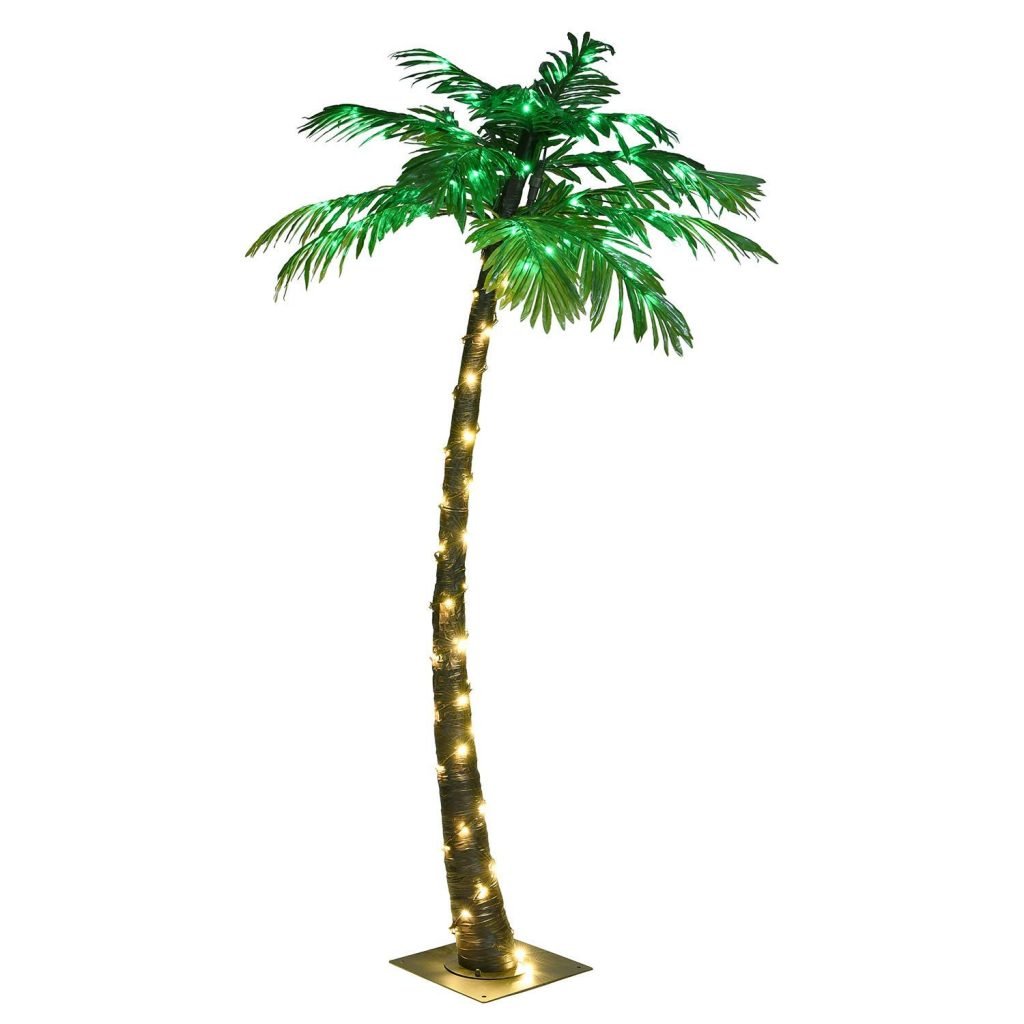
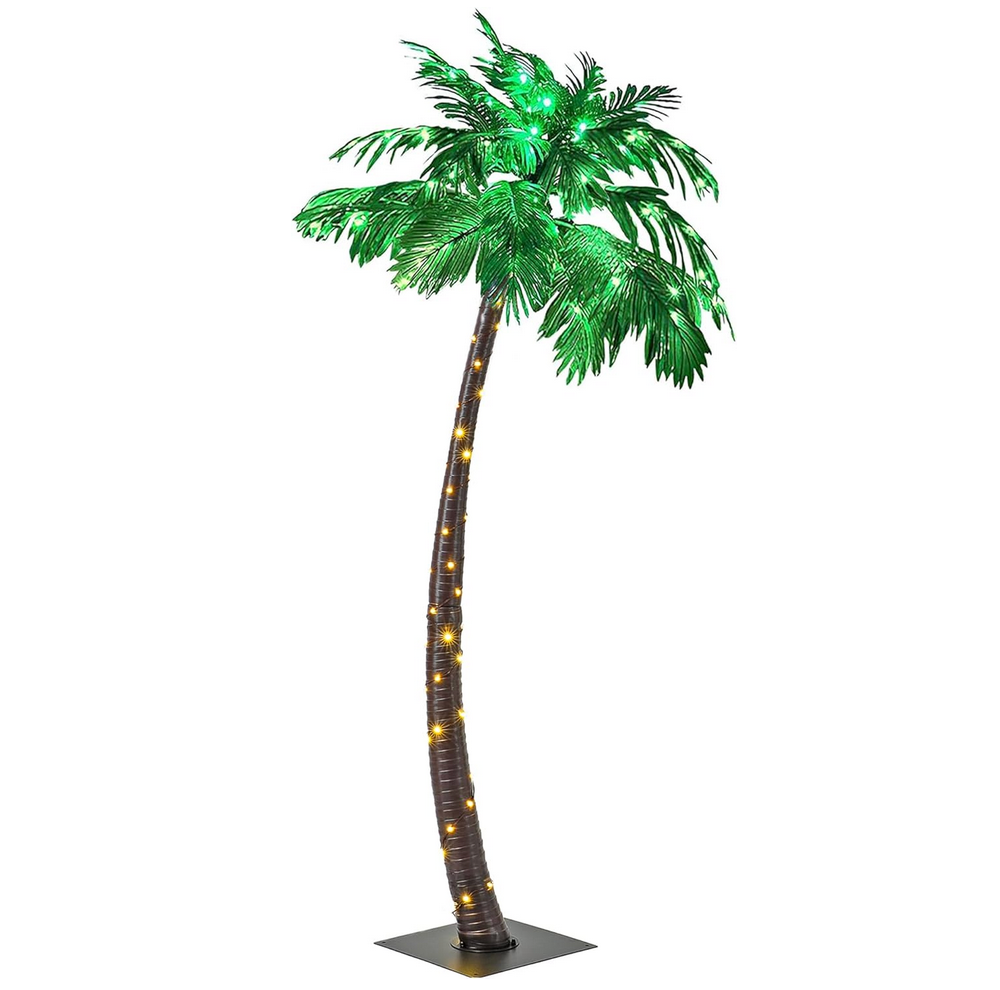
Lighting integration. Choose palms with built-in LEDs or install uplights in the base to highlight the fronds at night.
Dividing screens. Use taller palms as living (or faux) partitions to section off seating, dining, or play areas without building walls.
Installation & Maintenance Tips
Placement: Consider sightlines from indoors and pool seating — artificial palms should complement, not overpower, the layout.
Anchoring: For freestanding palms, use a heavy planter, concrete base or buried mounting system to prevent tipping in wind.
Cleaning: Wipe fronds with a damp cloth, or hose down periodically. Use mild soap for stubborn grime and rinse thoroughly.
Seasonal check: Even the best artificial palms benefit from a quick inspection before extreme weather seasons — check anchors, clean salt buildup (if pool is saltwater), and confirm LED components if present.
Sustainability & Ethical Options
If environmental impact matters to your customers, consider:
- Preserved real-frond palms: Crafted from actual fronds treated to last — they avoid synthetic plastics and have realistic texture.
- Recyclable components: Look for suppliers who use recyclable plastics and offer parts replacement to extend lifespan.
- Durable design over cheap replacements: A higher-quality, longer-lasting palm reduces waste compared to repeatedly replacing low-cost units.
Before purchasing an artificial palm for a pool area, confirm:
- The palm’s rated use (indoor vs. outdoor).
- UV and saltwater resistance if the installation is poolside or beachfront.
- Whether a pot or anchoring system is included.
- The height and canopy width relative to installation space.
- The materials used for both trunk and fronds.
- Warranty details and availability of replacement parts.
Also review photos of completed installations and customer reviews to verify how the palms hold up over time.
Frequently Asked Questions (FAQ)
Yes. High-quality artificial palms designed for outdoor use resist UV, moisture and pool chemicals. Always verify the manufacturer’s outdoor rating.
Minimal – occasional dusting or hosing is generally enough. For saltwater or chlorine exposure, rinse more frequently to prevent buildup.
Large, dense-canopy palms can create shaded spots, but they won’t match the cooling or microclimate benefits of mature live trees. Use them in combination with umbrellas or shade sails for functional shade.
Look for specialty landscape suppliers, commercial decor firms, and reputable online retailers that list outdoor ratings, UV protection specs and real-world installation photos.
Leave a Reply